Business Valuation for Purchase Price Allocation (PPA)
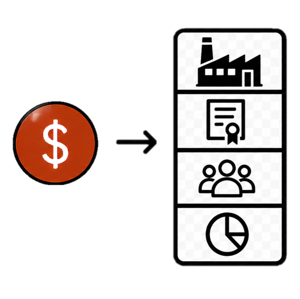
When a business is acquired, accounting standards require that the total purchase price be allocated to the identifiable assets acquired and liabilities assumed. This process—referred to as Purchase Price Allocation (PPA)—requires a valuation of both tangible and intangible assets at fair value.
PPA valuations are performed in accordance with U.S. GAAP, primarily under ASC 805 and ASC 820.
Purpose of a PPA Valuation
A PPA valuation is required to assign the purchase price of an acquired business to individual assets and liabilities, namely:
- establish the value of tangible assets (equipment and real estate appraisals might be needed separately)
- mark to market certain assets and liabilities
- determine the value of identifiable intangible assets
- quantify goodwill as a residual
- support financial reporting and audit requirements
This allocation directly impacts the acquirer’s balance sheet and future earnings through amortization and impairment testing.
Standard of Value
PPA valuations are performed under the Fair Value standard as defined by ASC 820:
The price that would be received to sell an asset or paid to transfer a liability in an orderly transaction between market participants at the measurement date.
This standard reflects market participant assumptions and differs from Fair Market Value used in tax-related valuations.
Assets Typically Valued
Tangible Assets
- cash (namely, mark-to-market of cash equivalents and investments) and working capital
- inventory
- property, plant, and equipment (equipment and real estate appraisals might be needed separately)
Identifiable Intangible Assets
- customer relationships and contracts
- trade names and trademarks
- developed technology or software
- non-compete agreements
These assets are recognized separately when they meet identifiability criteria and are subject to amortization.
Goodwill
Goodwill represents the residual value after allocating the purchase price to all identifiable assets and liabilities. It typically reflects:
- expected synergies
- assembled workforce
- going concern value
Goodwill is not amortized but is subject to periodic impairment testing.
Valuation Approaches and Methods
PPA valuations apply established valuation approaches depending on the nature of the asset:
Income-based Methods
- Multi-Period Excess Earnings Method (MPEEM) for customer relationships
- Relief-from-Royalty method for trademarks and trade names
Market and Cost Methods
- Market data may be used where comparable information is available
- Cost approaches may apply to certain tangible and internally developed assets
- Industry experts may be necessary for determining the replacement cost of certain assets, such as internally developed software
Watch the video on how to value intangible assets.
Reporting Framework and Standards
Purchase Price Allocation (PPA) analyses are performed for financial reporting purposes in accordance with ASC 805 (Business Combinations) and ASC 820 (Fair Value Measurement).
While ASC 805 and ASC 820 establish the accounting framework and fair‑value measurement principles applicable to business combinations, there are no separate valuation‑profession standards that are unique to PPA engagements. Accordingly, the valuation work underlying a PPA remains a valuation engagement and is performed in accordance with applicable professional valuation standards and ethical requirements, including the Professional Standards and Code of Ethics of the National Association of Certified Valuators and Analysts (NACVA), as applicable.
Consistent with these standards and with ASC 805/820 requirements, the engagement includes:
- identification of the assets acquired and liabilities assumed
- determination of the fair value of each identifiable asset and liability as of the acquisition date
- application of appropriate valuation approaches and methods consistent with market‑participant assumptions
- documentation of key assumptions, valuation inputs, and analytical procedures sufficient to support audit review
The resulting deliverable is structured to support management’s financial reporting and audit requirements, with emphasis on asset‑level identification, valuation methodologies, assumptions, and supporting schedules, rather than on an opinion of overall business or equity value.

Key Considerations
- Valuations are based on market participant assumptions, not buyer-specific plans
- The analysis is performed at the enterprise level, without minority or marketability discounts
- Coordination with auditors is often required
- Report and documentation must support financial reporting and withstand audit review
What sets
valuations apart
A Valuation you can Trust • A Report you can defend • A process that follows your timeline