



Types of Business Valuation Engagements & Reports
This page explains the different types of business valuation engagements and reports, and how to determine which approach is appropriate for your situation.
Not all valuations are the same. The type of engagement depends on the purpose of the valuation, the level of reliance expected, and the degree of scrutiny the work may face. Selecting the right type ensures that the analysis is both appropriate and cost-effective.
Two Primary Types of Valuation Engagements
This brief video explains the difference between a Valuation Engagement and a Calculation Engagement and thei different report types.
Under both NACVA Standards and AICPA Statement on Standards for Valuation Services, Business Valuations fall into two categories:
Valuation Engagement with a Conclusion of Value: This is the gold standard. It’s a detailed, comprehensive process that concludes with a well-supported value for your business.
Calculation Engagement: It’s a lighter version, limited in scope and number of Approaches and Methods. Provides a ‘calculated value’—helpful for planning or internal decisions
The distinction between them is based on scope, flexibility, and level of assurance.
Valuation Engagement with a Conclusion of Value
A Valuation Engagement with a Conclusion of Value is the most comprehensive and rigorous type of valuation.
Key Characteristics
- Full consideration of all relevant valuation approaches (income, market, and asset)
- Independent professional judgment in selecting methods and assumptions
- Extensive analysis and documentation
- Designed to withstand third-party scrutiny
When It Is Typically Required
- IRS filings (estate, gift, charitable contributions)
- Litigation and dispute matters
- SBA and other lender-required valuations
- Mergers, acquisitions, and significant transactions
Level of Reliance
This is the highest level of assurance and is generally required whenever the valuation will be reviewed by third parties such as courts, tax authorities, lenders, or boards.
Types of Reports for a Valuation Engagement with a Conclusion of Value
A Valuation Engagement can be delivered in different formats depending on the level of detail required.
Detailed Report
A Detailed Report provides a comprehensive explanation of:
- company background and operations
- economic and industry context
- financial analysis and normalization adjustments
- valuation methodologies and assumptions
- reconciliation and final conclusion
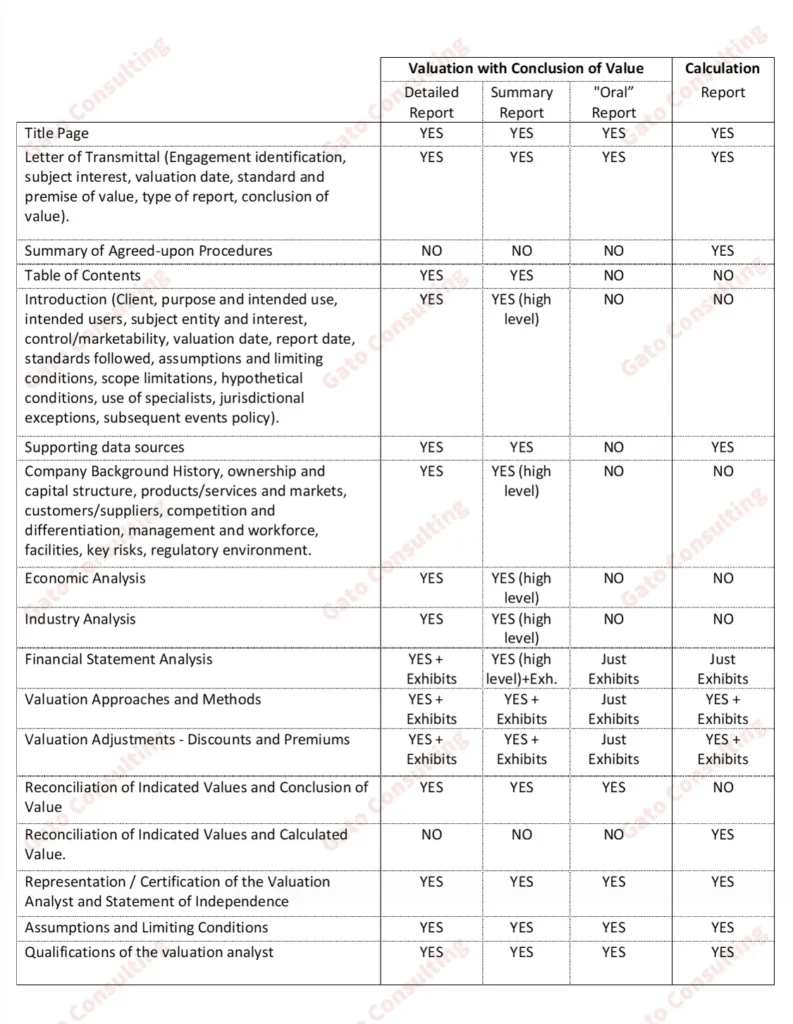
Please see the Report contents’ schedule for details of the Detailed Report contents.
👉 Typically used for:
- IRS reporting
- litigation and disputes
- high-value transactions
- situations requiring maximum defensibility
Summary Report
A Summary Report presents the key elements of the valuation in a more concise format while still supporting a Conclusion of Value.
Please see the Report contents’ schedule for details of the Summary Report contents.
👉 Typically used for:
- transactions
- financing
- internal decision-making with some third-party reliance
Oral Report
An Oral Report may be used in limited circumstances, typically accompanied by supporting materials.
Please see the Report contents’ schedule for details of the Oral Report contents.
Note: NACVA Standards do not require Oral reports to be provided in any physical form, however, we will provide a written “Oral Report” with the information shown on the Report contents’ schedule.
👉 Typically used for:
- transactions
- financing
- internal decision-making with some third-party reliance
Calculation Engagement
Key Characteristics
- Limited scope
- Agreed-upon methods and assumptions – not all three approaches need to be considered (Market, Income, and Asset)
- Reduced analysis and documentation
- Faster and more cost-effective
A Calculation Engagement includes a Calculation report. Please see the Report contents’ schedule for details of the Calculation Report contents.
👉 Typically used for:
- management planning
- early-stage decision-making
- preliminary valuation discussions
- situations with limited third-party reliance
Level of Reliance
A Calculation Engagement provides a reasonable estimate of value but is not intended to withstand the same level of scrutiny as a Valuation Engagement.
Choosing the Right Approach
The choice between a Valuation Engagement and a Calculation Engagement depends on:
- purpose of the valuation
- who will rely on the report
- level of scrutiny expected
- time and cost considerations
A simple way to think about it:
A Valuation Engagement is comparable to a full diagnostic exam.
A Calculation Engagement is more like a targeted check-up.
Both are useful—but they serve different purposes.
When a Full Valuation Engagement Is Required or Strongly Recommended
While both approaches are valid, certain situations require—or strongly favor—a Valuation Engagement with a Conclusion of Value, often supported by a Detailed Report.
These situations are characterized by third-party reliance, legal exposure, or long-term consequences.
IRS and Tax-Related Matters
A full valuation is typically required when the analysis may be reviewed by tax authorities, including:
- Gift Tax reporting (Form 709)
- Estate Tax filings (Form 706)
- Charitable contributions of business interests (Form 8283)
- Transfers to irrevocable trusts and similar structures
These situations often involve:
- lifetime exemption calculations
- “adequate disclosure” requirements
- potential review years after the transaction
👉 A Detailed Report is generally necessary to support defensibility.
Litigation and Dispute Matters
A full valuation is required when the work may be used in legal proceedings, including:
- Divorce and marital dissolution
- Partner and shareholder disputes
- Solvency and insolvency opinions
- Any matter involving expert testimony or court review
These engagements require:
- full documentation
- methodological transparency
- the ability to withstand cross-examination
👉 Calculation engagements are generally not appropriate in these contexts.
Financing and Lender Requirements
Valuations may be required by lenders in situations such as:
- SBA 7(a) loans, particularly involving ownership transfers
- Commercial financing tied to business value or cash flow
- Management buyouts and leveraged transactions
In these cases:
- lenders often define the required scope
- the valuation supports underwriting decisions
👉 A Conclusion of Value is typically expected.
Transactions and Board-Level Decisions
A full valuation is strongly recommended for:
- Mergers and acquisitions
- Sale of a business
- Significant ownership changes
- Board-level strategic decisions
This is particularly important for:
- medium and larger businesses
- situations involving multiple stakeholders
- transactions where pricing must be justified
👉 A Detailed Report provides the level of rigor expected in these environments.
When the Stakes Are High
Even outside formal requirements, a full valuation is often appropriate when:
- the value is material to the owner’s net worth
- decisions are difficult to reverse
- multiple parties rely on the outcome
How This Connects to Valuation Purpose
Each valuation purpose discussed on this site corresponds to a different level of required rigor.
As a general framework:
- Tax, legal, and dispute-related purposes → require a Valuation Engagement with a Detailed Report
- Financing and Significant Transactions → typically require a Conclusion of Value, but may be supported by a Summary Report, depending on audience and significance.
- Planning and exploratory work → may begin with a Calculation Engagement
Each purpose page provides specific guidance based on its context.
Engagement Scope and Report Differences
The table below summarizes the differences in scope and reporting between engagement types.
A Structured and Transparent Approach
At Gato Consulting, valuation engagements are aligned with the intended use of the analysis. The objective is to provide the appropriate level of rigor—no more and no less—based on the needs of the engagement.
This ensures that clients receive work that is both defensible and cost-effective, consistent with the core differentiators presented below.
What sets
valuations apart
A Valuation you can Trust • A Report you can defend • A process that follows your timeline